News
Apapa Fuel Spill: A Dangerous Gamble with Lives and Futures

By Love Oyedokun
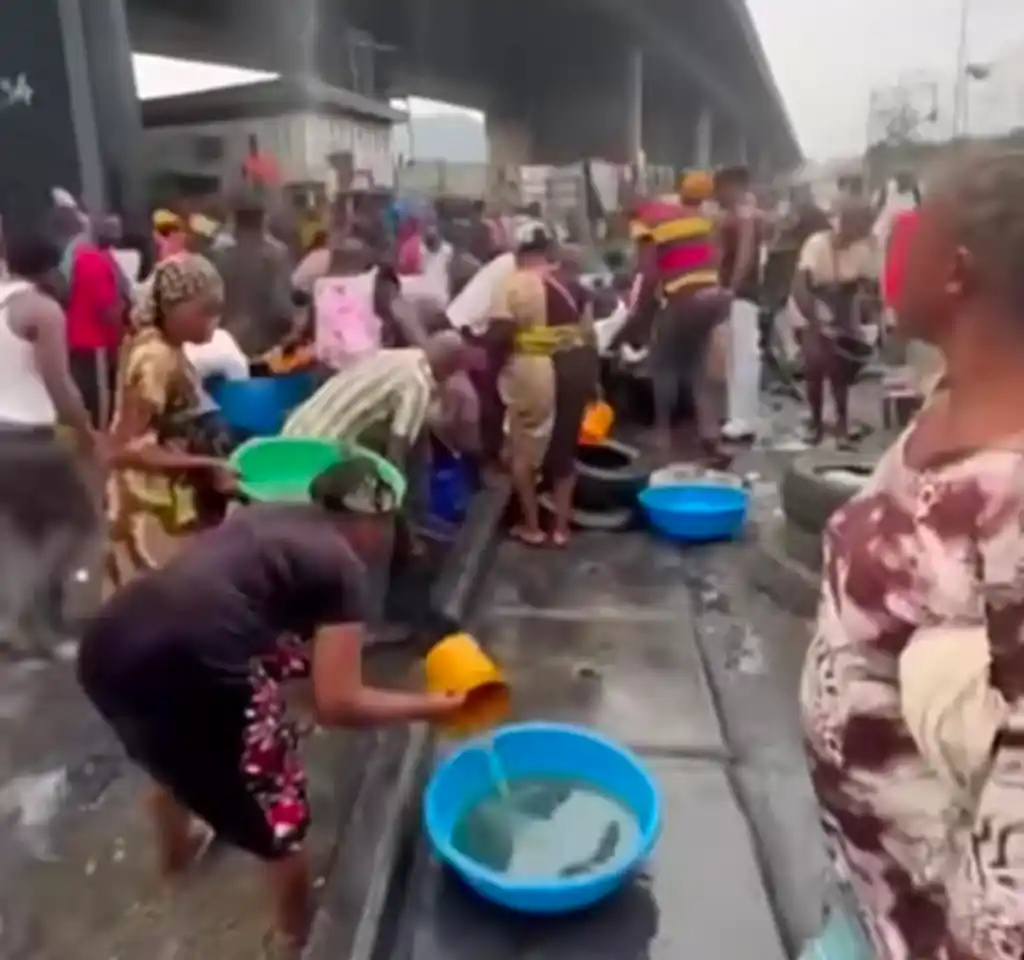
A diesel tanker overturned on Liverpool Bridge in Apapa, Lagos, on Monday, triggering a cascade of events that exposed a community teetering on the edge of disaster. While the immediate consequence was a crippling traffic gridlock, the most alarming development was the sight of residents swarming the damaged vehicle, risking life and limb to scoop up the spilled fuel. This act of desperation, captured in videos circulating on social media, underscores the complex interplay of economic hardship, lack of awareness, and the potentially devastating consequences of such actions.
Cablenews24 reports that the incident, which occurred inward Mile 2, has effectively blocked a major artery for commuters, causing significant delays and economic disruption. The Lagos State Traffic Management Authority (LASTMA) confirmed the incident via its official X (formerly Twitter) page, reporting that the diesel was spreading across the bridge, exacerbating the already precarious situation. The Nigerian Police Force was also notified and dispatched to the scene, but their presence did little to deter the crowds determined to collect the spilled fuel.
The sight of people armed with buckets, jerrycans, and other containers, eagerly collecting the spilled diesel, paints a picture of a community grappling with economic hardship. For many, the opportunity to obtain “free” fuel, even at great personal risk, is a tempting proposition. Diesel fuel is a valuable commodity, used to power generators, vehicles, and machinery. In a country where fuel prices fluctuate and access can be unreliable, the allure of a readily available supply is understandable.
However, this calculation ignores the multitude of dangers inherent in such an activity. While diesel is less volatile than gasoline, it is still highly flammable. The presence of sparks, open flames, or even static electricity could ignite the fuel, triggering a catastrophic explosion. The overturned tanker itself poses a significant risk, as its structural integrity may be compromised, increasing the likelihood of further spills or even a complete collapse.
Beyond the immediate risk of fire and explosion, the act of scooping fuel exposes residents to a range of serious health hazards. Direct skin contact with diesel can cause irritation, dermatitis, and other skin conditions. Inhalation of diesel fumes can lead to respiratory problems, including coughing, wheezing, and shortness of breath. Prolonged exposure can have even more severe consequences, potentially damaging the lungs, liver, and nervous system.
Children, pregnant women, and individuals with pre-existing health conditions are particularly vulnerable to the harmful effects of diesel exposure. The long-term consequences of such exposure can include chronic respiratory illnesses, increased risk of cancer, and developmental problems in children.
In addition to the immediate dangers and health risks, those involved in scooping fuel from the overturned tanker may also face legal repercussions. In Nigeria, tampering with oil pipelines and fuel tankers is a criminal offense, punishable by fines and imprisonment. While authorities may be lenient in cases where individuals are driven by economic hardship, the act of stealing fuel is still a violation of the law.
The Apapa fuel spill serves as a stark reminder of the need for greater awareness and preventative measures to address the risks associated with fuel tanker accidents. Authorities must prioritize the safe transportation of fuel, ensuring that tankers are properly maintained and operated by qualified drivers. Emergency response teams must be adequately equipped and trained to contain spills quickly and effectively.
Furthermore, there is a critical need to educate communities about the dangers of scooping fuel from accident sites. Public awareness campaigns should highlight the risks of fire, explosion, health hazards, and legal consequences. These campaigns should be tailored to the specific needs and cultural context of vulnerable communities, using clear and accessible language.
The Apapa fuel spill is a tragedy waiting to happen. By addressing the underlying issues of economic hardship, lack of awareness, and inadequate safety measures, Nigeria can prevent future incidents and protect its citizens from the devastating consequences of fuel tanker accidents. The time for action is now.
About Cablenews24:
CableNews24 is an online TV and newspaper website offering a dynamic mix of up-to-the-minute news, and insightful articles, We’re your trusted companion in navigating today’s fast-paced world. We delivers everything you need to stay connected. From local happenings to global events, we deliver news that matters…Join the CableNews24 experience – where news meets convenience.
CableNews24 – News, Anytime, Anywhere.
For Advertisement, Event Coverage/MC, Public Relations, Story/Article Publication, and other Media Services, kindly send an email to: cablenews24.com@gmail.com OR Kindly call: 08023535955 . To stay updated with the latest news stories, kindly visit cablenews24.com published by AAAANDREL GLOBAL SERVICES



AMVCA 12: A Week-Long Cinematic Extravaganza
Ex‑depot price remains unchanged – Dangote Refinery

Zenith Bank Welcomes New Chairman, Engr. Mustafa Bello

ELC 5.0: NULASS LASU Pushes Cultural Identity, Leadership as Pillars of Governance

UEFA Semi-Finals: Second Legs Set for Dramatic Finish Live on SuperSport

Akume and the Benue Rebirth: When Statesmanship Speaks Louder Than Strife

Refinery Financing: Dangote Group Slams False Claims on ‘Rift’ with Elumelu

2026 Workers’ Day: Globacom Salutes Nigerian Workforce

Dangote Refinery Welcomes Back Redeployed Engineers
