Opinion
Beyond Promises: How Dapo Abiodun Quietly Rewrote Ogun State’s Health Sector Story

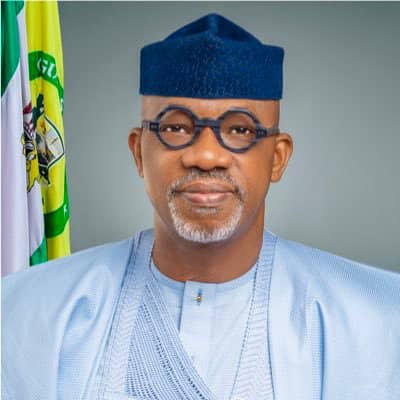
By Oluwaseyi Adeyinka
In Nigerian politics, health sector achievements are often announced loudly while citizens feel them faintly. Budgets are unveiled with flourish, policy documents are circulated, and official ceremonies are held. Yet, hospitals remain under-resourced, primary healthcare centres are reduced to skeletal structures, and emergency response systems are painfully slow.
Cablenews24 reports that for years, Ogun State reflected this familiar contradiction between promise and performance.
Interestingly, however, in the almost seven years since Governor Dapo Abiodun assumed office, a quieter but far more consequential transformation has unfolded. This shift has not depended on dramatic proclamations or headline-grabbing symbolism, but on a deliberate recalibration of priorities, systems and fiscal discipline.
The result has been a health sector that, while retaining some room for improvement, is more structured, verifiable and execution-driven than at any other point in the state’s recent history. This is the story of how Ogun State’s health sector moved from episodic interventions to sustained reform and why, when assessed chronologically and comparatively, the Abiodun era increasingly stands apart.
Whereas, for decades, health governance in Ogun mirrored a broader national challenge. Successive administrations articulated ambitious intentions, but implementation remained uneven. In the early democratic years of the Fourth Republic, health spending largely focused on stabilisation rather than systemic reform. Some general hospitals were subsequently upgraded, policy ideas were introduced, just as health insurance policies emerged.
However, the absence of consistent budget execution, transparent tracking, and coordinated sector-wide planning limited the long-term impact of these efforts. Infrastructure delivery was irregular, documentation weak and outcomes difficult to verify. Health financing fluctuated from year to year, often driven more by political cycles than by long-term system planning.
By 2019, the weaknesses had inadvertently become structural. Primary healthcare centres (PHCs) were overstretched, emergency response capacity was limited, health workers were demoralised and a credibility gap had widened between budget speeches and lived experience. It was into this context that Abiodun assumed office.
Upon his assumption as Governor, one of the clearest early signals of change came through health financing. Under the current administration, health moved from the margins of budgetary attention to a position of consistent priority. In the 2025 fiscal year, Ogun State allocated approximately ₦134.538 billion to the health sector out of a total ₦1.055 trillion budget, representing about 13 per cent of total expenditure.
You Might Also Like:
–How Governor Abiodun is Transforming Ogun From Gateway to Nigeria’s Economic Powerhouse
-Sanwo-Olu Activates Grassroots Army for Tinubu’s Agenda
Within Nigeria’s sub-national context, this figure is significant. Many states continue to allocate single-digit percentages to health, often below 10 per cent. Ogun’s allocation aligns with the minimum threshold commonly associated with guidance from the World Health Organization and places the state close to the African Union’s 15 per cent Abuja Declaration aspiration.
More importantly, this allocation was not an isolated occurrence. In preceding and even the 2026
budgets, health consistently received between 12 and 13 per cent of total expenditure, signalling policy consistency rather than one-off generosity.
Yet allocation alone does not define reform. What elevates Ogun’s experience is execution. Independent budget-tracking and performance reports indicate that the state’s overall budget implementation rate rose steadily toward the 75 – 80 per cent range under Abiodun, a notable improvement from the pre-2019 era, which was widely characterised by weak and inconsistent execution.
Health-sector budgetary utilisation followed this upward trajectory, climbing from chronically low levels to above two-thirds utilisation in audited periods, even amid national economic headwinds. In a country where the health budget Organisation sacrificed to recurrent pressures, the shift promoted by Abiodun’s administration is not cosmetic. It is structural.
Viewed across three political periods since 2003, the contrast is instructive. In the first period (2003–2011), health sector allocations were generally modest, often in single digits, reflecting a national pattern at the time. Health spending existed, but it rarely approached global benchmarks and execution was constrained by limited fiscal discipline and weak reporting frameworks.
The second period (2011–2019) saw larger overall state budgets, but health sector allocations largely remained below international thresholds. Available analyses and budget tracking from that era consistently describe health financing as under 10 per cent of total expenditure in many years, unevenly applied and poorly documented. While policy ideas and infrastructure projects emerged, sustained prioritisation of health within the budget framework was limited.
By contrast, the period from 2019 to the present marks a clear inflexion point. Health allocations moved decisively into double-digit territory, approaching 13 per cent and crucially, were backed by improved execution. In both percentage terms and consistency over successive budgets, Abiodun’s period represents Ogun State’s strongest fiscal commitment to health since 2003.
Chronologically, the next major reform thrust focused on primary healthcare. Rather than concentrating solely on high-profile tertiary facilities, the Abiodun administration prioritised the rehabilitation, equipping and staffing of Primary Health Care centers across all senatorial districts.
This bottom-up approach aligns with global best practice. Strong health systems are built on accessible primary care, not just sophisticated apex institutions. In Ogun, many PHCs that once existed only in name have become functional first-contact facilities. The impact has been tangible: reduced pressure on tertiary hospitals, improved maternal and child health outcomes and shorter travel times for rural residents seeking basic care. These changes did not arrive with dramatic ceremony, but they altered the everyday experience of healthcare for thousands of residents, arguably the most reliable indicator of reform.
Perhaps no policy illustrates the administration’s pragmatic style more clearly than the tricycle ambulance initiative. Ogun State is predominantly agrarian, defined by dispersed farming settlements, narrow untarred roads and hard-to-reach communities. In such terrain, conventional ambulances, expensive to maintain and often unable to navigate rural routes, frequently fail the most critical test in healthcare: response time.
The decision to deploy tricycle ambulances to Primary Health Care centers was therefore not an exercise in optics, but a response to geography. Critics initially framed the initiative as a lowering of standards. Yet in emergencies, survival is determined less by sophistication than by speed. For pregnant women in labour, accident victims on farm roads, or elderly residents facing sudden complications, a simple, reliable means of transport can mean the difference between life and death.
Therefore, in rural Ogun, the tricycle ambulance emerged not as a compromise, but as a lifeline. The subsequent replication of this model beyond Ogun underscores its policy soundness. Its adoption in urban-adjacent and environmentally sensitive areas elsewhere reinforces a central lesson: innovation in governance is defined not by spectacle, but by suitability.
This is because emergency response reforms extended beyond mobility. Ambulance services were strengthened, emergency medical coordination institutionalised and response capacity improved. In healthcare, time is currency and Ogun began to spend it more wisely.
Equally important was the recognition that infrastructure without manpower is wasted capital. By securing full accreditation and upgrading the state’s Schools of Nursing and Midwifery, an achievement not realised in over four decades, the Dapo Abiodun administration laid a generational foundation for the health workforce. This reform reduces dependence on external recruitment and ensures that physical investments are matched by human capacity.
Globally, the COVID-19 pandemic tested every government. Nonetheless, in Ogun, Governor Abiodun turned the disaster into an unexpected catalyst. In response to the outbreak, laboratory capacity was strengthened, emergency systems upgraded and inter-agency coordination improved. Crucially, many of these assets have now endured beyond the crisis, becoming permanent fixtures of the state’s health architecture. Where some states dismantled emergency structures once the immediate threat passed, Ogun retained and integrated them.
Perhaps the most telling validation of these reforms has come from those who work within the system. Health worker industrial actions during this period have been comparatively moderate and more responsive to negotiation than prolonged stalemates. Professional associations have acknowledged improvements in welfare engagement, including salary adjustments and the implementation of national benchmarks. In a sector where praise is rare and often cautious, such acknowledgements matter.
Beyond organised labour, citizens themselves have become validators. Beneficiaries of free medical and surgical outreach programmes speak of receiving care that would otherwise have remained out of reach. Community leaders point to renovated Primary Health Care centers that reduce travel time and ease pressure on tertiary hospitals. These incremental gains collectively build credibility.
Unarguably, when taken together, these strands point to a clear conclusion: the current administration represents Ogun State’s most data-verifiable and execution-driven period in health governance since 2003. This is not to deny the efforts of earlier periods, but to recognise that budget discipline, execution tracking, institutional reform and service delivery have converged more consistently in this era.
Ogun has yet not been declared Nigeria’s best-performing health system, challenges remain. Yet politics is also about direction. Under Abiodun, the direction is unmistakable: fewer abandoned allocations, more completed projects; fewer announcements, more operational systems.
As 2027 approaches, this record carries implications beyond the health sector. In Nigerian politics, state-level performance increasingly shapes future political viability. Quiet but measurable achievements provide a platform that cannot be easily replicated through rhetoric alone.
In an era where noise often substitutes for substance, Dapo Abiodun’s health sector legacy offers a different model of leadership, one rooted in context, discipline and execution. It will not be remembered for slogans, but for systems that respond, institutions that train, and policies that meet people where they live. History has a way of rewarding leaders who choose results over rhetoric. On the balance of evidence, Ogun State’s health sector under the current administration has set a new, enviable benchmark, one that future governments will be measured against.
About Cablenews24:
CableNews24 is a digital multimedia news platform featuring online news channel and a digital newspaper, covering Breaking News, featuring articles on politics, technology, and general news. We’re your trusted companion in navigating today’s fast-paced world, delivering everything you need to stay connected. From local happenings to global events, we deliver news that matters…Join the CableNews24 experience – where news meets convenience.
CableNews24 – News, Anytime, Anywhere.
For Advertisement, Event Coverage/MC, Public Relations, Story/Article Publication, and other Media Services, kindly send an email to: cablenews24.com@gmail.com OR Kindly call: 08023535955 . To stay updated with the latest news stories, kindly visit cablenews24.com published by AAAANDREL GLOBAL SERVICES







AMVCA 12: A Week-Long Cinematic Extravaganza

Ex‑depot price remains unchanged – Dangote Refinery

Zenith Bank Welcomes New Chairman, Engr. Mustafa Bello

ELC 5.0: NULASS LASU Pushes Cultural Identity, Leadership as Pillars of Governance

UEFA Semi-Finals: Second Legs Set for Dramatic Finish Live on SuperSport

Akume and the Benue Rebirth: When Statesmanship Speaks Louder Than Strife

Refinery Financing: Dangote Group Slams False Claims on ‘Rift’ with Elumelu

2026 Workers’ Day: Globacom Salutes Nigerian Workforce

Dangote Refinery Welcomes Back Redeployed Engineers
