Connect with us

Maritime

Ports and Cargo Posts Strong Rebound After 2024 Slump

Published

on

By

Ports and Cargo

By Love Oyedokun

Lagos, Nigeria, February 9, 2026 — After navigating through one of the most turbulent periods in its recent operational history, Ports and Cargo Handling Services Limited, a flagship subsidiary of the SIFAX Group, has announced a robust operational rebound driven by a decisive strategic pivot toward general cargo and break-bulk handling. The terminal operator, which endured a challenging 2024 marked by the departure of several high-profile clients and consequent declines in cargo volumes and revenue, is now positioning itself for sustained growth in 2026, bolstered by streamlined operations, strategic workforce realignment, and significant capital investments in handling equipment.

Cablenews24  reports that the company’s resurgence represents a textbook case of adaptive management within Nigeria’s increasingly competitive maritime logistics sector. Faced with eroding market share and dwindling profitability in 2024, management initiated a comprehensive operational review that culminated in the deliberate narrowing of service focus—a contrarian move in an industry often characterized by diversification strategies. Rather than attempting to retain container traffic dominance amid fierce competition and volatile shipping schedules, Ports and Cargo elected to consolidate its expertise around general cargo and break-bulk commodities, segments that management identified as underserved yet high-potential niches within the West African maritime corridor.

John Jenkins, Managing Director of Ports and Cargo Handling Services Limited, elaborated on the strategic recalibration during a briefing with maritime correspondents in Lagos. “Our strategic operational reforms played a critical role in the rebound,” Jenkins stated. “The decision to refocus was not merely reactive; it was predicated on deep market analysis revealing sustained demand for specialized handling of non-containerized goods, particularly given Nigeria’s infrastructure development trajectory and the evolving patterns of Asian manufacturing exports to Africa.”

The restructuring extended beyond market positioning into fundamental operational engineering. Central to the recovery was the comprehensive overhaul of the company’s stevedoring activities—the crucial process of loading and unloading ships. By renegotiating service provider contracts and implementing leaner operational protocols, the terminal achieved significant reductions in operating expenditures while simultaneously enhancing productivity metrics. These improvements were further augmented by targeted capital injections into critical handling infrastructure, including the acquisition of specialized forklifts and essential spare parts that had previously constrained operational fluidity.

Human capital optimization formed the third pillar of the turnaround strategy. The company executed a deliberate workforce rebalancing initiative, recruiting competent professionals to fill key operational vacuums that had hitherto compromised service delivery efficiency. This talent infusion, combined with the equipment upgrades, created a synergistic effect that enabled the terminal to handle higher throughput volumes without proportional increases in operational costs—a critical efficiency gain in an industry where margins remain vulnerable to global economic fluctuations.

Looking toward 2026, Ports and Cargo has projected substantial revenue growth, with general cargo operations expected to constitute the dominant revenue stream. This optimistic forecast is anchored in observable market trends, including escalating import volumes of steel products—essential for Nigeria’s construction and manufacturing sectors—increased automobile shipments, and rising consignments of palletized cargo. Additionally, the company anticipates capitalizing on strengthening trade flows from Asia, particularly China and India, as Nigerian importers diversify supply chains and Asian manufacturers intensify market penetration efforts across West Africa.

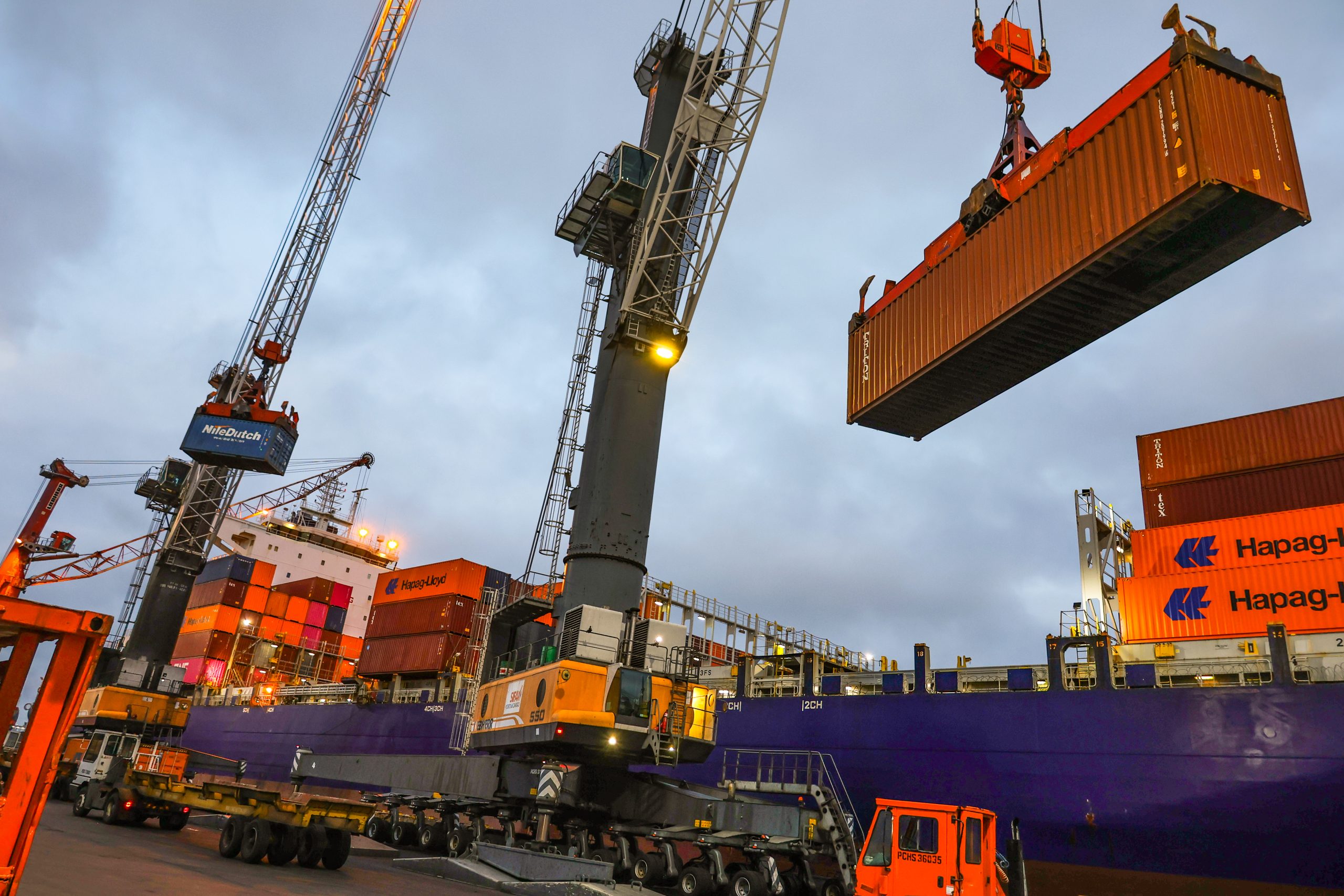
To actualize these growth projections and accommodate anticipated volume surges, the company has outlined an ambitious 2026 capital expenditure program designed to eliminate current capacity bottlenecks. The investment pipeline includes comprehensive crane upgrade initiatives aimed at enhancing lifting capabilities and reducing vessel turnaround times—a critical metric for shipping lines evaluating port calls. Complementing these heavy-lift investments, the terminal plans to expand its fleet of forklifts and terminal trucks, moves expected to significantly reduce reliance on third-party equipment hires that had previously inflated operational costs and introduced scheduling uncertainties.

Despite these positive trajectories, Jenkins acknowledged persistent headwinds that could temper growth expectations. Spatial constraints within the terminal footprint continue to limit storage capacity and operational maneuverability, while the broader volatility characterizing global container shipping services—exacerbated by geopolitical tensions and fluctuating fuel costs—remains an external variable beyond the company’s immediate control. Nevertheless, management expresses measured confidence in their risk mitigation frameworks.

“The lessons internalized during the 2024 downturn have fundamentally recalibrated our approach to cost discipline, customer relationship management, and operational precision,” Jenkins reflected. “Whereas demand generation previously consumed our strategic bandwidth, our current constraint lies in execution capacity. Our 2026 agenda therefore prioritizes operational excellence—handling incrementally higher cargo volumes while rigorously protecting profit margins and sustaining the profitability we have fought to restore.”

Industry analysts view Ports and Cargo’s strategic repositioning as indicative of broader maturation within Nigeria’s terminal operating sector, where operators increasingly recognize the viability of specialization over universal service provision. As the company enters 2026 with renewed operational vigor and fortified infrastructure, its trajectory offers insights into resilience strategies applicable across Africa’s evolving maritime logistics landscape.

Click to comment

Leave a Reply

Your email address will not be published. Required fields are marked *