Feature
Ogun East 2027: Independent Validation, Economic Direction and the Question of Representation

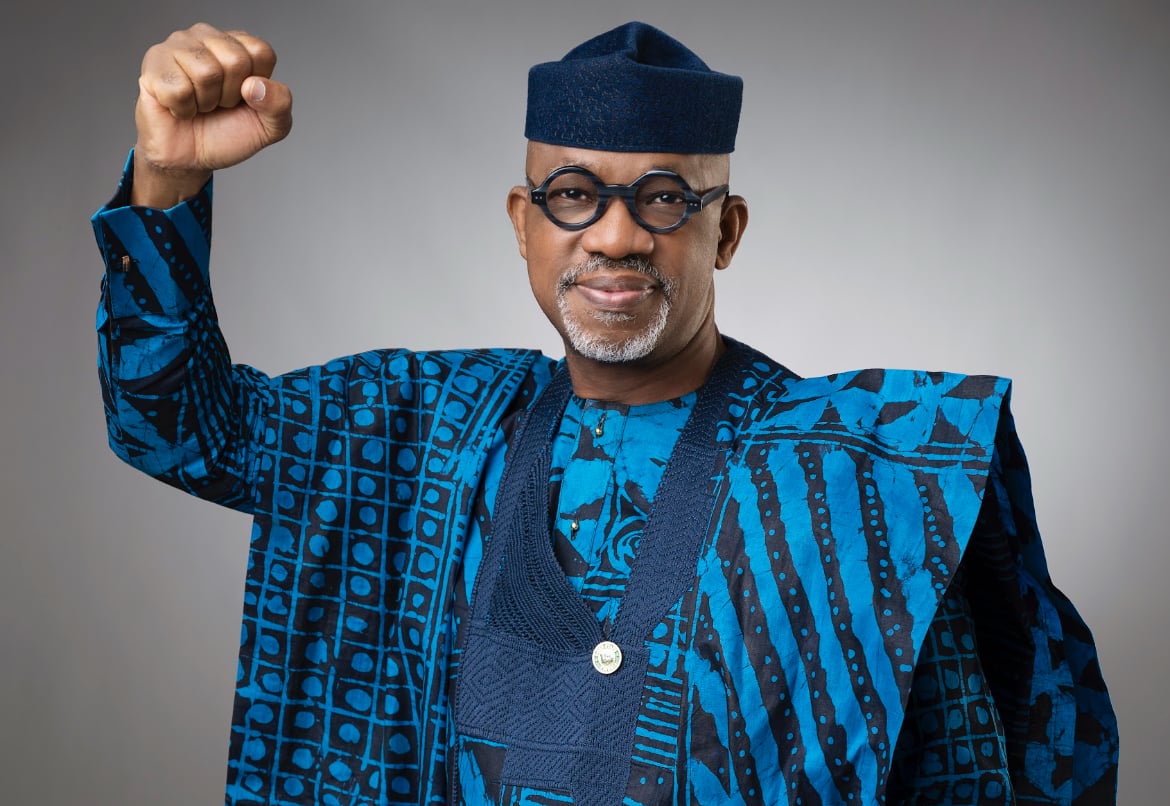
Adeyinka Oluwaseyi
As political conversations gradually shift toward the 2027 Ogun East Senatorial contest, comparisons between past and present administrations in Ogun State have become inevitable. This is because the contest is set to be between a former governor who is a serving Senator and incumbent governor Dapo Abiodun who has never hidden his intention to contest the seat and offer Ogun East constituents a better and more acceptable representation. Such comparisons are not only legitimate, but essential in a democracy.
Cablenews24 reports that however, given some sponsored claims being circulated on Facebook and other micro-blogging platforms, there arises the need to set records straight, so that comparisons are rooted in measurable outcomes, institutional credibility, and verifiable independent assessments rather than partisan emotion.
Undoubtedly, Ogun State’s governance journey from 2003 to 2011 laid the groundwork for certain institutional and infrastructural foundations. These emphasized educational initiatives, early trade-zone development, and structural expansion within the state’s public architecture. These contributions are part of Ogun’s historical evolution and deserve contextual acknowledgement.
Yet governance is not static. Economic expectations have shifted significantly over the past decade. Subnational performance today is evaluated not only by physical infrastructure but by regulatory efficiency, investor responsiveness, global integration, and competitiveness in attracting capital. Within this modern framework, the administration of Dapo Abiodun since 2019 represents a distinct phase in Ogun’s development trajectory, increasingly validated by independent private-sector voices.
Perhaps the most compelling element in assessing recent governance performance is the perspective of organised industry. Governments can publish scorecards. Political actors can craft narratives but what carries more objective weight is recognition from institutions whose core mandate is economic performance rather than political alignment.
The Manufacturers Association of Nigeria (MAN), Nigeria’s leading industrial advocacy organisation, has consistently acknowledged Ogun State’s strategic importance to national manufacturing output. Ogun remains one of the states with the highest concentration of manufacturing investments in the country, and industry stakeholders have repeatedly emphasised improvements in engagement and responsiveness at the subnational level in recent years.
Public statements from MAN leadership and Ogun-based manufacturing stakeholders have referenced enhanced collaboration between the state government and industrial operators. These commendations have centred on policy stability, security coordination around industrial corridors, and structured dialogue mechanisms that allow manufacturers to raise operational concerns directly with policymakers. Such recognition is significant because manufacturers assess environments pragmatically.
Their interest lies in cost efficiency, regulatory clarity, and predictable governance, not political rhetoric.
Beyond MAN, other organised business institutions have also pointed to Ogun’s improving business climate. The Lagos Chamber of Commerce and Industry (LCCI), in broader Southwest economic assessments, acknowledged the importance of Ogun’s industrial positioning and policy consistency. Similarly, the Nigerian Association of Chambers of Commerce, Industry, Mines and Agriculture (NACCIMA) has emphasised the critical role of subnational regulatory reforms in strengthening Nigeria’s manufacturing ecosystem, an area in which Ogun has remained competitive.
These recognitions reflect a pattern, suggesting that the business community perceives Ogun as a state where government engagement is structured and where industrial expansion is supported rather than obstructed. Ease of doing business, in this sense, moves beyond slogans and becomes an operational reality measured by approval timelines, land administration clarity, infrastructure alignment, and policy predictability.
A notable illustration of investor confidence in Ogun’s evolving economic environment is the proposed deep seaport initiative associated with the Dangote Group. This was never the case at any time prior to the emergence of Abiodun in 2019. Large-scale infrastructure proposals of this magnitude are preceded by rigorous due diligence, creditable to no other demonstration in the state but the incumbent.
Conglomerates consider regulatory frameworks, security stability, logistics connectivity, and the long-term reliability of state institutions before initiating such capital-intensive ventures.
While such projects remain subject to multi-layered approvals and phased implementation processes, the very contemplation of a seaport within Ogun’s coastal axis signals investor perception of viability. That perception does not emerge spontaneously but is shaped by sustained engagement, policy incentives and confidence in governance continuity. Industry observers have linked Ogun’s attractiveness to deliberate efforts at strengthening its investment climate in recent years.
Industrial consolidation across established corridors further reinforces this narrative. Agbara, Sagamu, Iperu, and Abeokuta continue to host expanding manufacturing operations, reflecting cumulative investment flows. Ogun’s longstanding identity as an industrial hub predates 2019, but the scaling and reinforcement of that status in a more competitive national economy underscore the significance of recent policy orientation promoted by the Abiodun-led administration.
Notably, the difference between earlier governance cycles and the present era is less about erasure and more about evolution. The administration between 2003 and 2011 operated within a different economic landscape, where foundational industrial positioning was still maturing. Today, globalised supply chains, digital compliance expectations, and intensified inter-state competition require more refined regulatory agility and investor diplomacy.
Governor Abiodun’s administration has aligned itself with these contemporary demands. Infrastructure projects have increasingly been framed as economic enablers rather than isolated political milestones. Top operationalisation of the Gateway International Airport and expansion of road networks linked to industrial clusters and sustained investor engagement forums collectively point to an integrated economic strategy.
For Ogun East voters contemplating senatorial representation in 2027, the relevance of this record extends beyond state boundaries. The Senate is not merely a platform for legislative presence; but a forum for fiscal negotiation, infrastructure advocacy, and policy influence at the federal level. Governor Dapo Abiodun, with recent executive experience in industrial expansion and private-sector negotiation may be uniquely positioned to articulate regional economic interests.
This does not negate the historical contributions of previous administrations. The years between 2003 and 2011 remain part of Ogun’s institutional memory. However, electoral decisions are typically forward-looking, weighing not only tenure length but contemporary validation.
Unarguably, independent commendations from bodies such as the Manufacturers Association of Nigeria, allied chambers of commerce and sectoral investment groups provide a tangible dimension to the current administration’s performance narrative. These are not partisan endorsements; but reflections of operational experience within the state’s economic ecosystem.
As 2027 approaches, the debate within Ogun East will definitely revolve around which leadership profile aligns best with the district’s economic aspirations. Voters will consider who has recently navigated industrial policy, engaged multinational investors and secured independent recognition for business-friendly governance. In these aspects, Abiodun stands towering in terms of qualification for a well-oriented senator to represent Ogun East.
In that conversation, the record since 2019 stands out for its external validation and economic positioning. For many observers, the sustained commendations for organized industry bodies underscore a broader conclusion: that Ogun’s present economic trajectory reflects structured engagement, policy stability, and investor confidence.
Ultimately, the electorate will decide. But in assessing readiness for national legislative responsibility, independent voices from the manufacturing and business community provide an important reference point, one that places contemporary economic credibility, Prince Dapo Abiodun’s known trademarks, at the center of the 2027 discussion.
About Cablenews24:
CableNews24 is a digital multimedia news platform featuring online news channel and a digital newspaper, covering Breaking News, featuring articles on politics, technology, and general news. We’re your trusted companion in navigating today’s fast-paced world, delivering everything you need to stay connected. From local happenings to global events, we deliver news that matters…Join the CableNews24 experience – where news meets convenience.
CableNews24 – News, Anytime, Anywhere.
For Advertisement, Event Coverage/MC, Public Relations, Story/Article Publication, and other Media Services, kindly send an email to: cablenews24.com@gmail.com OR Kindly call: 08023535955 . To stay updated with the latest news stories, kindly visit cablenews24.com published by AAAANDREL GLOBAL SERVICES


AMVCA 12: A Week-Long Cinematic Extravaganza
Ex‑depot price remains unchanged – Dangote Refinery

Zenith Bank Welcomes New Chairman, Engr. Mustafa Bello

ELC 5.0: NULASS LASU Pushes Cultural Identity, Leadership as Pillars of Governance

UEFA Semi-Finals: Second Legs Set for Dramatic Finish Live on SuperSport

Akume and the Benue Rebirth: When Statesmanship Speaks Louder Than Strife

Refinery Financing: Dangote Group Slams False Claims on ‘Rift’ with Elumelu

2026 Workers’ Day: Globacom Salutes Nigerian Workforce

Dangote Refinery Welcomes Back Redeployed Engineers
